What are the Four major skills of Language Lab?

The Four Major skills of Language Lab is LSRW skills—Listening, Speaking, Reading, and Writing. Language Lab software follows a balanced approach to language acquisition, where all four major skills are given equal attention.
Using English Language Lab software tool creates an interactive environment that helps school/college students, English language learners, can develop their English fluency, pronunciation, accuracy, and conversation skills. With an easy-to-use design, fluency in these areas improves language learning effectively.
These skills are divided into levels (A1 to C1), exactly like video games! A1 is for beginners who want to learn basic skills such as understanding what they read and acquiring new terms. C1 is for advanced players who want to learn like a pro.
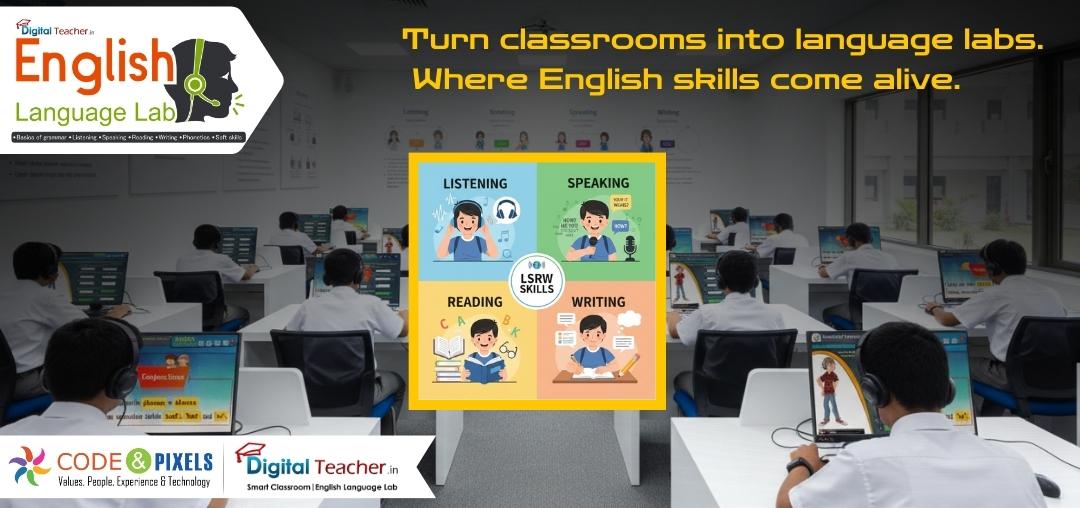
Listening Skills
The first step in learning about Listening Skills is to listen. Remember that listening is an active, not passive, activity. There is a major difference in hearing and listening. When you listen, you are completely involved.
That is why it is very important to listen! Because you are interested in learning more as well as hearing what someone is saying. This allows you to fully understand what is being said.
So, the next time you’re at a meeting, a discussion, or an interview, remember to listen! It’s a skill that will benefit you in many aspects of your life.
Speaking Skills
So, starting with the basics, how to learn speaking skills? The most important tip I can give you is to learn English speaking by listening. Good Speaking Practice: improves effective pronunciation, fluency, and communication confidence. Through continuous listening and speaking. The language lab improves speaking and communication abilities.
The nice thing is that while learning English, speaking and listening to your own voice in a recording may feel strange at first, but as you get used to it, recording yourself speaking may be a useful way to improve your language skills.
Reading Skills
So, The third skill is reading, while reading is important, (L&S) listening and speaking come first because they establish the basis for skilled reading comprehension. Before getting into written material in “Reading First,” the main focus is on understanding spoken language.
Reading requires understanding, quickness, and deduction. When We make meaning of what we read by examining characters, storylines, goals, and surroundings. Thinking, asking questions, and creating real-life connections are all required when reading.
Writing Skills
The skill of writing defines your capacity to express yourself via written words. It’s not only about spelling and grammar; it’s about expressing your thoughts and communicating them to others. Writing is important at school, at work, as well as for conversing with friends.
To improve your writing skills, you should practice regularly, study a lot, and seek help from teachers or other writers. There are also workshops online and offline language tools that available to help you improve. This tool can help you identify Grammar and fix regular mistakes. Being a skilled writer is necessary for communicating effectively in several aspects of your everyday activities.


